
How Ecuador Can Ascend to the World’s No. 2 Cocoa Producer and What the Cacao Sector Must Do to Sustain Its Rise
Photo credit: Koltiva
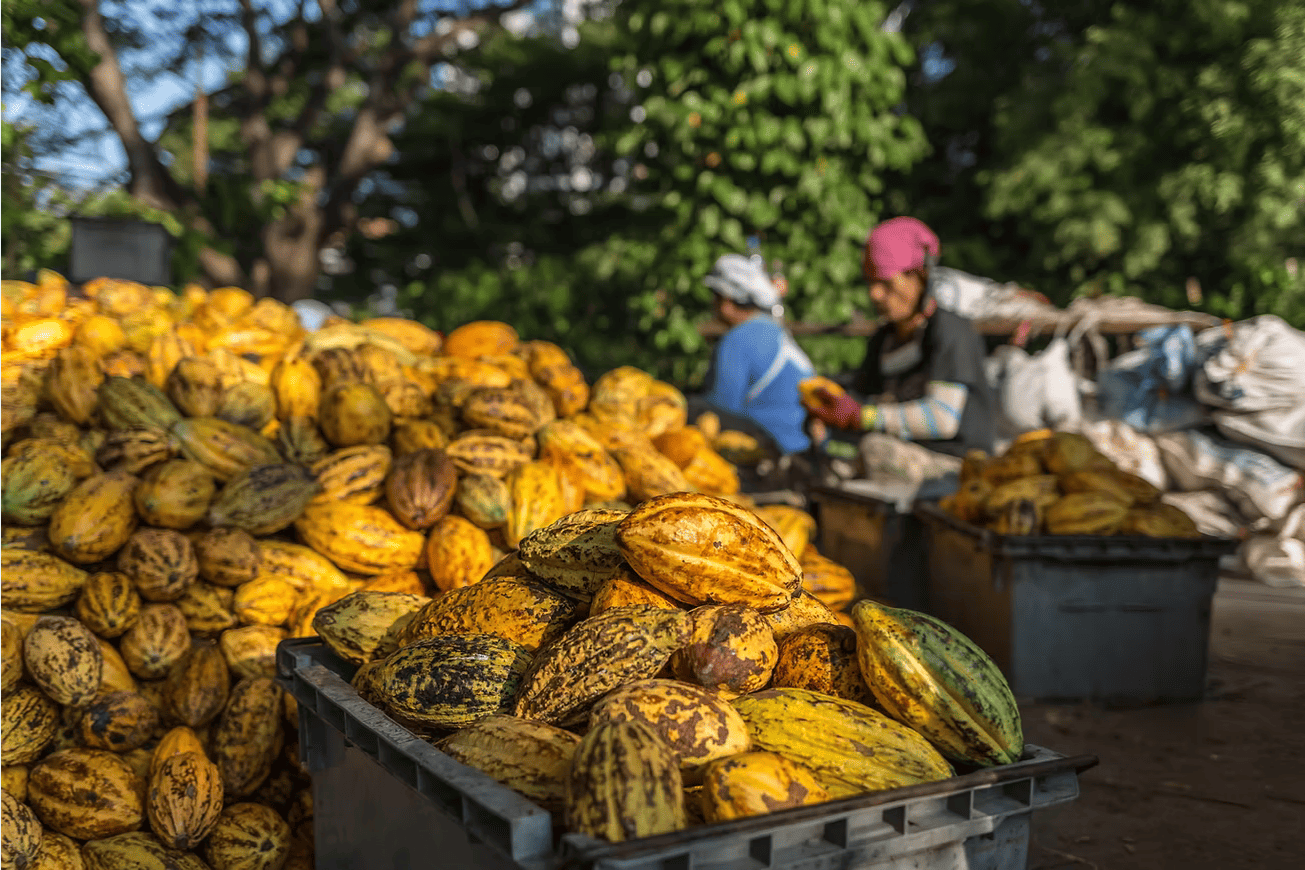
Global cocoa supply is entering a structural transition. With Côte d’Ivoire and Ghana facing declining yields from swollen shoot disease, aging trees, climate stress, and illegal mining, Ecuador is expected to overtake Ghana and become the world’s No. 2 cacao producer by 2026. Record prices have accelerated farmer reinvestment, boosting productivity across Ecuador’s agroforestry-based cacao systems.
Price volatility is reshaping farmer behavior and sector stability. The recent surge has lifted incomes for an estimated 400,000 producers and exporters, but it has also increased exposure to risks, such as overreliance on high prices, reduced diversification, and rising security threats targeting cacao farmers in Ecuador, Peru, Venezuela, and Colombia. This trend is also evident in Colombia, where historically high cocoa prices are driving farmers to shift from illegal coca cultivation to cocoa, further tying livelihoods to volatile global markets (Infobae, 2025).
Data and traceability are becoming non-negotiable for market access. As the EU Deforestation Regulation (EUDR) takes effect, buyers require geolocation precision, deforestation-free validation, and transparent sourcing. Companies increasingly turn to traceability platforms like KoltiTrace MIS to consolidate farm data, monitor supply chain risks, and provide verifiable proof of compliance.
Read the complete article here.