
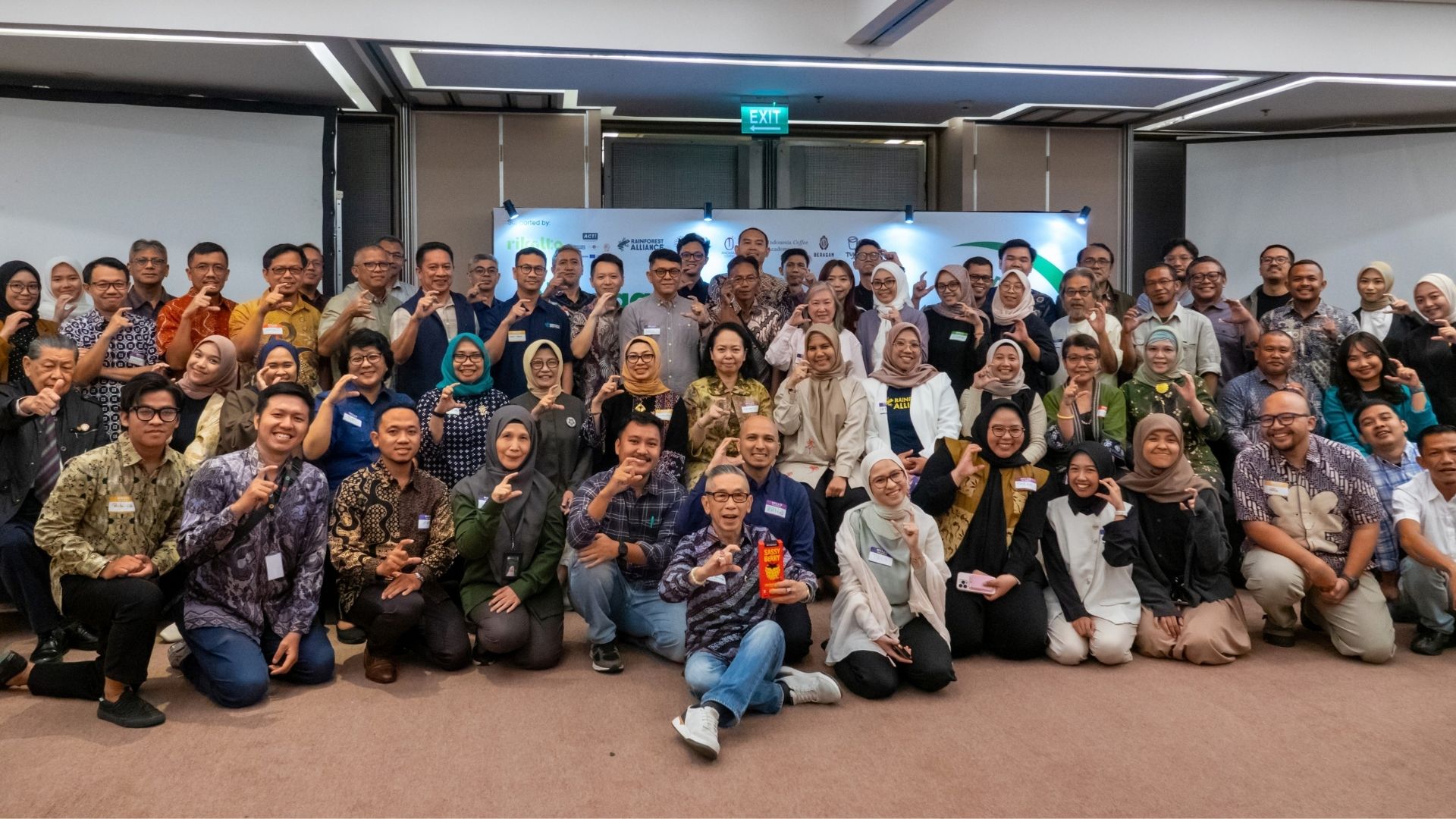
SCOPI Member Assembly 2026 Strengthens Collective Action to Achieve a Sustainable, Resilient, and Prosperous Coffee Ecosystem
Jakarta, 10 June 2026 – Sustainable Coffee Platform of Indonesia (SCOPI), along with its members and strategic partners, agreed on a cross-sectoral collective action amongst stakeholders to accelerate the transformation of Indonesia’s coffee sector towards an ecosystem that is sustainable, resilient, and prosperous. The agreement was a result of SCOPI’s Member Assembly 2026 with a theme of “Navigating the New Normal: Mewujudkan Ekosistem Kopi Berekelanjutan, Tangguh, dan Sejahtera”. The session began with a Fun Cupping where participants could participate in tasting coffee variants from across Indonesia and ended with a common understanding that the coffee sector needs a stronger and more coordinated collaboration.
SCOPI’s Board Chairman for 2024- 2027, Irvan Helmi, started the discussion through a context-setting and highlighted various challenges faced by the coffee sector, starting from global regulations, market access, and the increasing impact of climate change that has started a new normal for coffee production centers. He also highlighted SCOPI’s achievement of reaching more than 90,000 coffee farmers through Master Trainers and emphasized the need to spread impacts from farmers to a systemic-level transformation.
From her welcoming remarks, the Director of Beverages, Tobacco, and Refreshment Products, Ministry of Industry, Merrijantij Punguan Pintari, emphasizes the importance of regulatory support and cross-sectoral synergy to strengthen Indonesia’s coffee competitiveness.
The government’s touch or intervention is highly hoped for on our coffee commodities. Coffee can be regarded as a strategic commodity, since its actors and stakeholders are mostly smallholder farmers.” Said Merri.
The direction for collaboration strengthening is echoed through a keynote speech from Puspita Suryaningtyas, Deputy Secretary on Food, Natural Resources, and the Environment, The Ministry of National Planning and Development. She emphasized that the coffee sector strengthening must encompass the whole supply chain, starting from the farmers’ productivity to downstreaming, logistics, innovation, and global market access.
“The government has several large programs; colleagues from the association also have large programs. To achieve a larger impact, we hope that these programs can be aligned together. A tighter coordination and data strengthening, so that the implementation can receive actual feedback for future improvement.” Closes Puspita.
These commitments are aligned to the SCOPI Outlook 2026 presentation by SCOPI’s Executive Director, Ade Aryani, where she emphasizes SCOPI’s role as a neutral and pre-competitive platform to strengthen intermember collaboration and strategic partners.
“How can we map our member initiatives and accelerate collaboration between members and SCOPI’s strategic partners. Here, together as Indonesia’s coffee community, we move forward and improve together.” Ade explains.
The discussion is enriched through a panel discussion by the Head of Purchasing of PT Mayora Indah Tbk and member of SCOPI’s Supervisory Board, Richard Atmadja, Cocoa and Coffee Programme Manager, Rikolto Indonesia, Nuzul Qudri, and Founder and CEO of Adena Coffee and SCOPI’s management board, Abyatar – moderated by the Director for BERAGAM Indonesia and SCOPI’s management board, Nur Jamila. The discussion resulted in a common understanding that Indonesia’s coffee sustainability requires stronger investment, farmer regeneration, climate adaptation, and stronger collaboration from upstream to downstream.
Through an “Innovation Session: Uncovering Root Causes for Collective Action”, participants are invited to identify four priority areas for collective action: regulatory compliance and market access, regenerative agriculture and climate change, farmers’ welfare and living income gap, and coffee sector governance.
In addition to generating strategic agreements, the 2026 SCOPI Member Assembly also featured Business Matchmaking, connecting sustainable coffee producers with potential buyers from the industrial, retail, and Hospitality (hotel, restaurant, and cafe) sectors. This activity was designed to provide a significant economic benefit for SCOPI’s members and network, especially through facilitating sustainable coffee business meetings.
The 2026 SCOPI Member Assembly was supported by Rikolto Indonesia, ITFC, Rainforest Alliance, Varion Coffee, Anomali Coffee, Indonesia Coffee Academy, BERAGAM, and Toko Kopi Tuku. This activity was also supported by the ACT! Project, a consortium consisting of Rainforest Alliance, SCOPI, and the Cocoa Sustainability Partnership (CSP), supported by the European Union through the SWITCH-Asia program. The support of these partners reflects the spirit of collaboration that is an important foundation in realizing a more sustainable future for Indonesian coffee.
About SCOPI
The Sustainable Coffee Platform of Indonesia (SCOPI) is a non-profit association that bridges the government, private sector, and farmers to promote sustainable agricultural practices to improve farmer welfare and environmental sustainability. SCOPI is part of the Global Coffee Platform (GCP) network.
About SCOPI
The Sustainable Coffee Platform of Indonesia (SCOPI) is a non-profit association that bridges the government, private sector, and farmers to promote sustainable agricultural practices to improve farmer welfare and environmental sustainability. SCOPI is part of the Global Coffee Platform (GCP) network.